.png)
Flu Season & Senior Health: Why Vaccination Matters in Long-Term Care

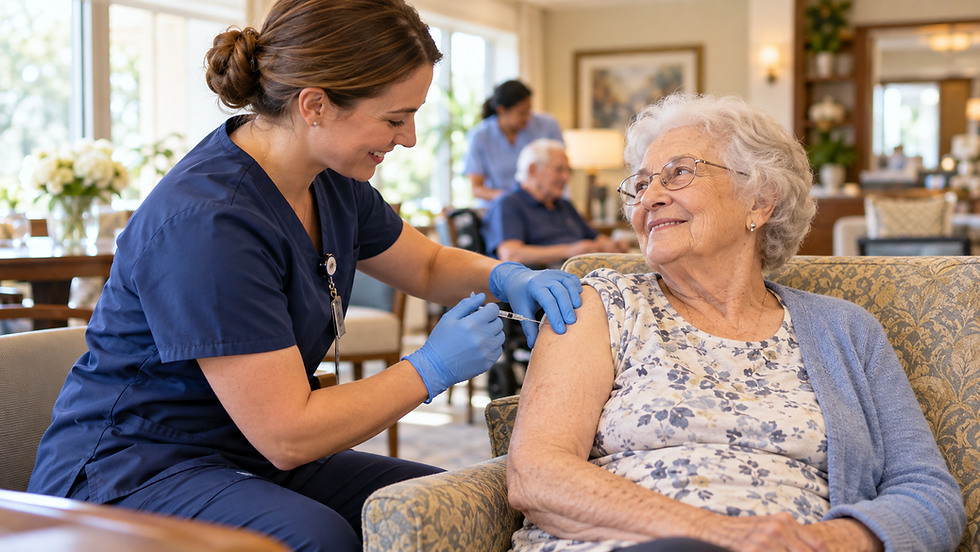
As fall arrives in West Virginia, flu season is never far behind. For older adults, especially those living in nursing and long-term care communities, preparing for flu season is an important part of staying healthy.
While influenza can affect anyone, adults 65 years of age and older are at greatest risk of developing serious complications from the flu. Changes in the immune system that occur with age, along with chronic conditions that are more common among seniors, can make recovering from influenza more difficult.
That makes annual flu vaccinations particularly important for seniors and the people who care for them.
Flu Can Be More Serious for Seniors
For many healthy adults, influenza may mean several uncomfortable days at home. For an older adult, however, the consequences can be much more significant.
Flu can contribute to complications such as pneumonia, worsening of existing medical conditions, hospitalization, and loss of strength or functional ability. According to the Centers for Disease Control and Prevention (CDC), people age 65 and older typically experience a substantial portion of the serious illness associated with seasonal influenza.
For seniors already working to maintain their strength, mobility and independence, preventing an avoidable illness can be especially valuable.
Vaccination Matters in Long-Term Care
Long-term care communities are unique environments. Residents live, receive care, participate in activities, dine and rehabilitate alongside others. Staff members, healthcare providers, visitors and family members also enter the community each day.
That sense of community is one of the strengths of long-term care - but it also makes infection prevention important.
The CDC specifically identifies vaccination as an important step for people living in nursing home and other long-term care settings. Annual flu vaccination among residents and healthcare personnel helps reduce the opportunities for influenza to spread among individuals who may be particularly vulnerable to severe illness.
Vaccination is only one part of prevention. Good hand hygiene, monitoring for symptoms, appropriate infection-control practices and staying home when sick all play a role in protecting seniors during respiratory illness season.
Are There Special Flu Vaccines for People 65 and Older?
Yes.
For the 2026-2027 flu season, CDC guidance preferentially recommends one of three types of influenza vaccine for adults age 65 and older:
High-dose inactivate flu vaccine
Recombinant flu vaccine
Adjuvanted inactivated flu vaccine
These vaccines are designed to help produce a strong immune response in older adults. If one of the preferentially recommended vaccines is not available, the CDC advises receiving another age-appropriate influenza vaccine rather than going without vaccination.
Residents and families should discuss individual medical questions, previous vaccine reactions and the most appropriate vaccine with their healthcare provider.
When Should Seniors Get Their Flu Shot?
Flu vaccination is recommended every year because circulating influenza viruses—and the vaccines developed to protect against them—can change from season to season.
The CDC generally recommends receiving the annual flu vaccine by the end of October, although vaccination can still provide important protection later in the season while influenza viruses continue circulating. It also takes approximately two weeks after vaccination for the body's immune response to develop.
That makes early fall a great time for seniors and their families to begin thinking about flu-season protection.
Protecting Our Community
In long-term care, infection prevention is more than protecting a single individual. It is about protecting an entire community.
Residents, families, caregivers and healthcare professionals all have a role to play. Annual influenza vaccination remains one of the most important tools available to reduce the risk of flu and its potentially serious complications.
At Trinity Healthcare Services, our focus extends beyond meeting the healthcare needs of our residents today. We believe in taking proactive steps to support their health, safety and quality of life throughout every season.
As flu season approaches, we encourage seniors, families and caregivers throughout Southern West Virginia to talk with their healthcare providers about annual influenza vaccination and the other steps they can take to stay healthy this fall and winter.
Looking for skilled nursing, rehabilitation or long-term care in West Virginia? Contact Trinity Healthcare Services of Logan to learn more about our services and how our team works to support the health and well-being of the people entrusted to our care.